Echoes of the Veneti in Ponso
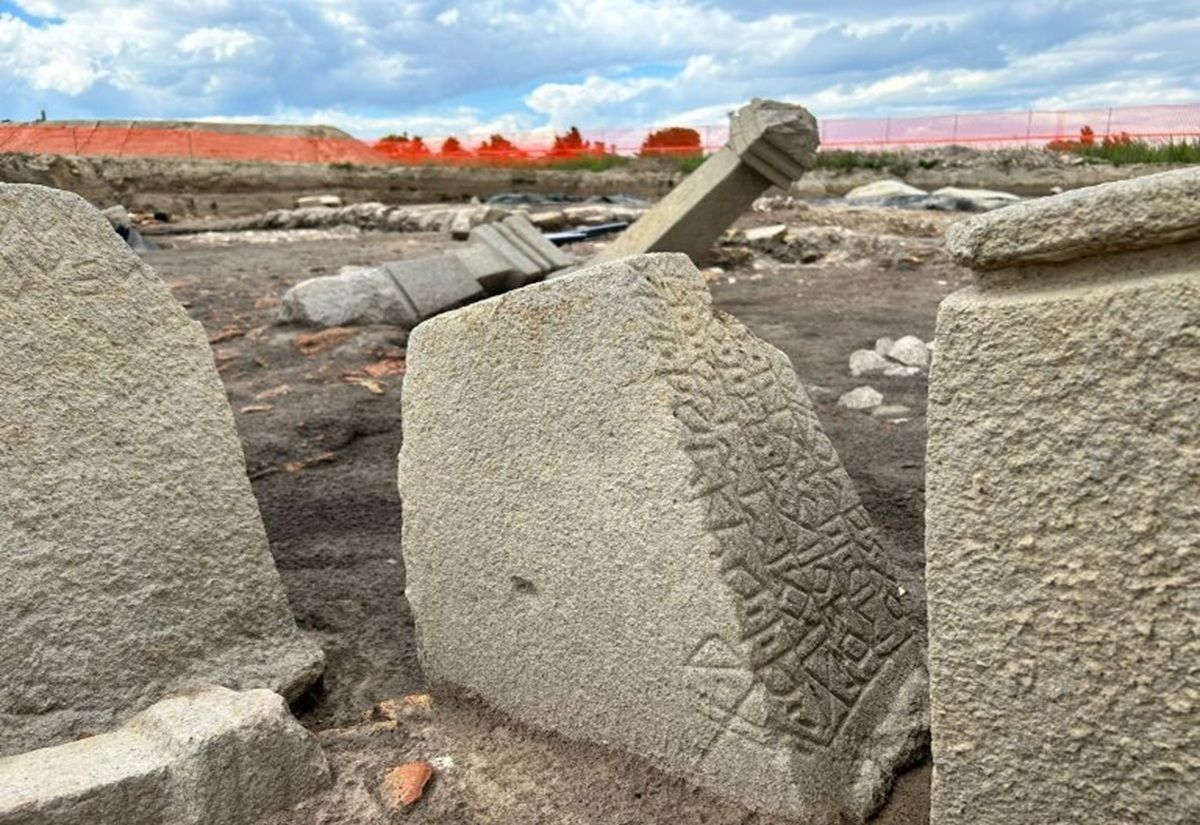
Archaeologists excavating at Ponso, near Padua in northeastern Italy, have uncovered an extensive sanctuary complex associated with the pre-Roman Veneti, containing inscribed stone monuments, monumental architecture, and evidence for long-term ritual activity extending into the Roman period. The discovery was made during works connected to the construction of the new “Padana Inferiore” regional road. It is easy to imagine the frustration of construction companies in Italy, where major works have a habit of functioning almost like archaeological alarm bells.
The finds include numerous stone cippi and stelae bearing inscriptions in the Venetic script, alongside at least one Latin-inscribed monument. Several of the stones are inscribed on multiple faces, suggesting they were intended to be viewed during ritual movement through the sanctuary, rather than functioning simply as boundary markers or funerary monuments. According to preliminary epigraphic assessments carried out by the excavation team, many of the inscriptions appear votive in character, indicating their use as offerings within this cultic setting.
Excavation has also revealed the foundations of a building, possibly a temple, that appears to follow the peripteral model, with columns arranged around the exterior in a form strongly associated with Mediterranean temple architecture. This reflects the cosmopolitan cultural environment of northeastern Italy during the Iron Age, where the Veneti occupied a frontier zone shaped by interaction with Etruscan, Celtic, and other Italic communities. The influence of the Etruscans is especially visible in literacy and religious display; the Venetic script itself ultimately derives from northern Etruscan alphabets, adapted to represent the local language while retaining many features of Etruscan writing traditions.
The Venetic language survives only through a relatively small number of inscriptions, most of them funerary or votive, and it remains only partially understood. Although generally classified as Indo-European, its exact relationship to neighbouring Italic languages is still debated. Unlike Latin, Venetic was never widely used for administration or literature; instead, it appears primarily in formal religious and commemorative settings. Sites such as Ponso are therefore important because they preserve writing within its original ritual context. The inscriptions were not records of government or commerce, but offerings in themselves; part of the dialogue between worshippers and the divine.
The site is also valuable for understanding the process of Romanisation in northern Italy. Rather than abandoning indigenous sacred places, Roman communities often absorbed and reinterpreted them, allowing older ritual landscapes to continue under altered political and cultural conditions. At Ponso, the continued use of the sanctuary into the Roman period suggests that local religious traditions retained significance long after Roman expansion into the Veneto during the 2nd and 1st centuries BC.
This challenges one of the more persistent assumptions surrounding Roman Italy. In hindsight, the peninsula is often imagined as culturally uniform: a people united by one language and identity beneath the authority of Rome. The reality was considerably more complex. Before Roman unification, Italy was home to a remarkable diversity of peoples: Etruscans, Samnites, Oscans, Umbrians, Greeks, Veneti, and many others, each with their own traditions, languages, and political structures. They traded with one another, fought alongside and against one another, and borrowed artistic and religious practices while retaining strong local identities.
The Veneti occupied a particularly important position within this mosaic of cultures. Situated between the Adriatic and the Po Valley, they acted as intermediaries between the Mediterranean world and continental Europe. Their adoption of writing from Etruscan models demonstrates not passive imitation, but active participation within wider networks of exchange and prestige. The sanctuary at Ponso reflects this blending of influences: local language and ritual expressed through architectural and epigraphic forms shaped by the wider Mediterranean world.
Their relationship with Rome also complicates the simplistic image of conquest and cultural erasure. During the Second Punic War, the Veneti are known to have supported Rome against Hannibal, and by the 2nd century BC many communities in northern Italy were becoming increasingly integrated into Roman political and economic systems. Romanisation was therefore not always imposed through violence alone; in many regions it emerged gradually through alliance, trade, military cooperation, and shared interests. Latin spread because it became useful: the language of administration, law, military service, and social mobility within an expanding Roman world.
Yet discoveries such as those at Ponso also reveal what was gradually lost in that process. Languages like Venetic did not disappear overnight, nor were they systematically suppressed, but over generations they ceased to be spoken as Latin became dominant. What survives are fragments: brief inscriptions carved onto stone and preserved beneath centuries of flood deposits. Sites such as Ponso preserve the final echoes of a local language and worldview before they were absorbed into the cultural gravity of Rome.
At the same time, the sanctuary demonstrates that Romanisation did not simply erase local identity. It offers the material traces of people negotiating between continuity and change in the centuries before and after Rome’s expansion across Italy. Religious traditions endured, sacred places continued to attract devotion, and older customs were often adapted rather than abandoned. The Roman world was never as culturally homogeneous as it is sometimes imagined, but instead an empire layered with regional identities that remained visible long after incorporation into Rome itself.