Water and Worship at Aigai
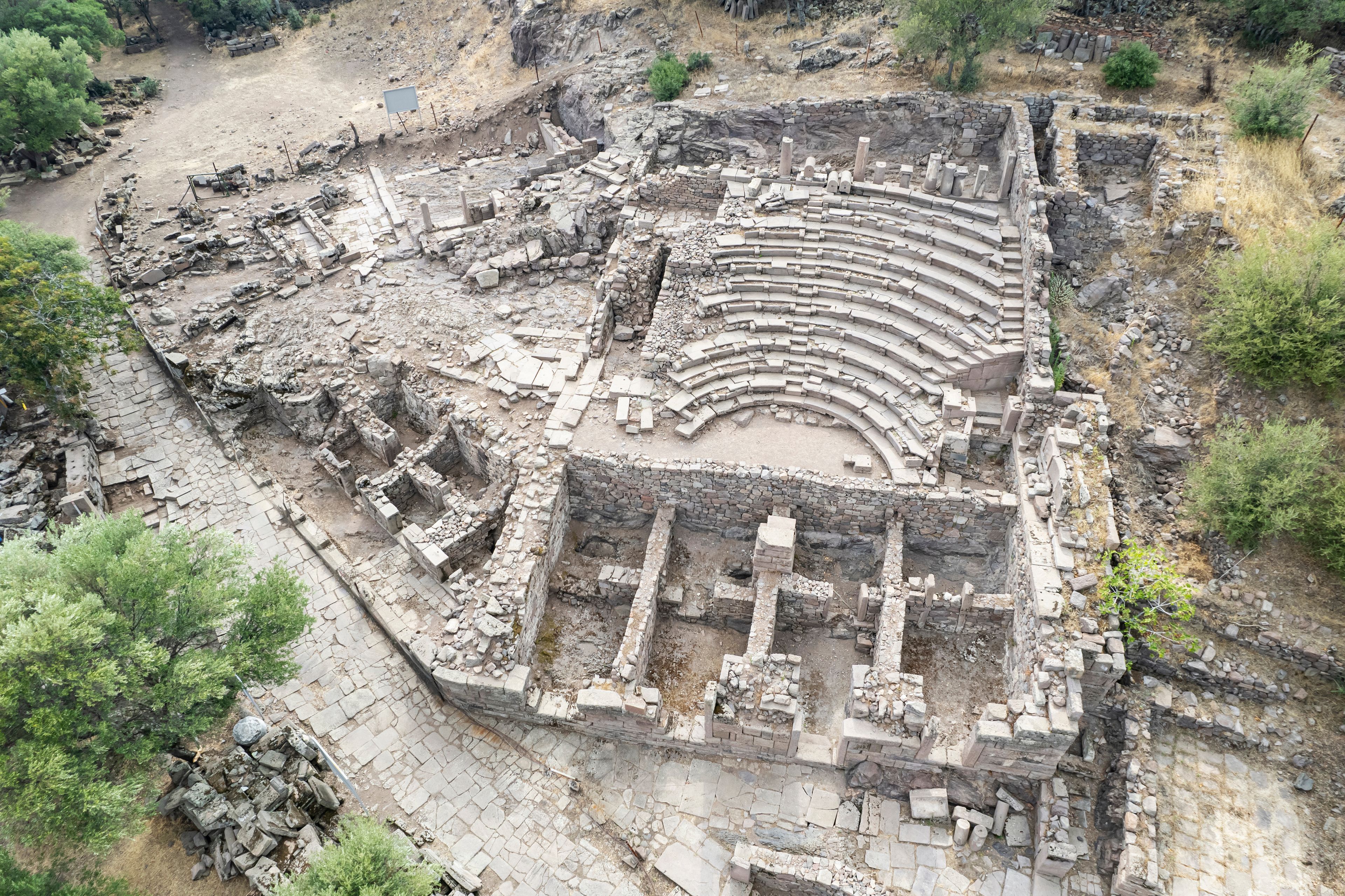
An excavation at the sanctuary of Demeter and Kore at Aigai in western Turkey has uncovered an exceptional concentration of ritual material during the first large scale investigation of the temple complex. Situated in the region of Aeolis, not far from the modern city of Manisa, Aigai occupied a rugged upland landscape where agriculture depended heavily on the careful management of limited water resources. Within this context, archaeologists have recovered approximately 3,000 small terracotta vessels, known as hydriskoi, from a defined depositional area within the sanctuary. These miniature; often single handled pots are interpreted as ritual objects rather than everyday containers.
The sanctuary was dedicated to Demeter, goddess of grain, agriculture, and the fertility of the earth, and her daughter Kore, better known as Persephone, who through her annual descent to and return from the underworld embodied the cyclical movement between life and death. Together, they were central to Greek religious conceptions of seasonal renewal, and their worship was closely tied to the success of crops and the stability of rural life.
The context of the find strongly suggests that the vessels were used in acts of offering. Devotees appear to have brought clean water to the sanctuary, presenting it to the goddesses as part of purification or fertility rites. Comparable practices are known from other similarly dedicated sanctuaries, where offerings could include not only liquids but also grains, cakes, and small votive figurines. At major cult centres such as Eleusis, the rites of Demeter and Kore were formalised into the Eleusinian Mysteries, while at smaller regional sites like Aigai, devotion is more often expressed through repeated, individual acts.
The scale of the assemblage is particularly significant; while similar vessels are known from other Greek sanctuaries, the concentration at Aigai points to a high degree of continuity in cult practice. It offers rare material evidence for individual participation in ritual behaviour, preserving thousands of discrete acts of offering within a single archaeological context.
Although a precise date for the hydriskoi has yet to be established, they can be placed broadly within the Hellenistic to early Roman periods. Aigai flourished between the 3rd and 1st centuries BCE before passing into Roman control, and the sanctuary appears to have been active across this span. The vessels themselves are simple in form, making close typological dating difficult, but their fabric and style are consistent with Hellenistic votive traditions. Their accumulation in a single depositional area further suggests long term, repeated use of the sanctuary rather than a single episode of activity.The prominence of water in these offerings is especially notable given the local environment. In a landscape where water availability would have shaped agricultural success, the act of dedicating water to deities of fertility and renewal takes on added meaning.